Designing around the concert memory
The diary became the centre of the product, but I didn't want it to feel like a database of events. The experience needed to balance personal memories, useful information and visual discovery.
Case study · 03 · Independent project
A personal concert diary that turns scattered memories and show history into a searchable, visual record of live music experiences.
I took Scenes from an idea to a working, deployed app. I handled the product thinking, UX and UI myself, and used AI‑assisted development to build it.
The problem
I've been to dozens of concerts and festivals over a decade, but my history of live music was scattered across my Notes app, Instagram stories, ticket emails and memory.
I wanted somewhere to record every show I'd been to, while capturing the details that make each experience personal: who I saw, where I went, who I went with and what I remembered.
Existing music platforms helped with discovery, tickets and setlists, but weren't designed around collecting and remembering the shows you'd already experienced.
Could I turn a personal concert history into a digital keepsake that was useful enough to keep coming back to?
The diary as the foundation
The social feed was the obvious idea. The diary's own data was the real opportunity.
The original concept was a concert diary with a much broader social experience around it. The early product designs included trending reviews, a social feed, following other users and artists, and ways to discover what other people were listening to and seeing live.
As I explored the product further, I realised the more interesting opportunity was the history being created by the diary itself. Each concert added structured information about the artists, venues, locations, genres, setlists and personal memories.
Rather than building another social music feed, I focused on combining the personal feeling of a diary with the usefulness of structured data.
Product principles
Capture the details that make each experience yours.
Make your history worth looking back through.
Turn accumulated history into insights.
Make adding past and future shows easy.
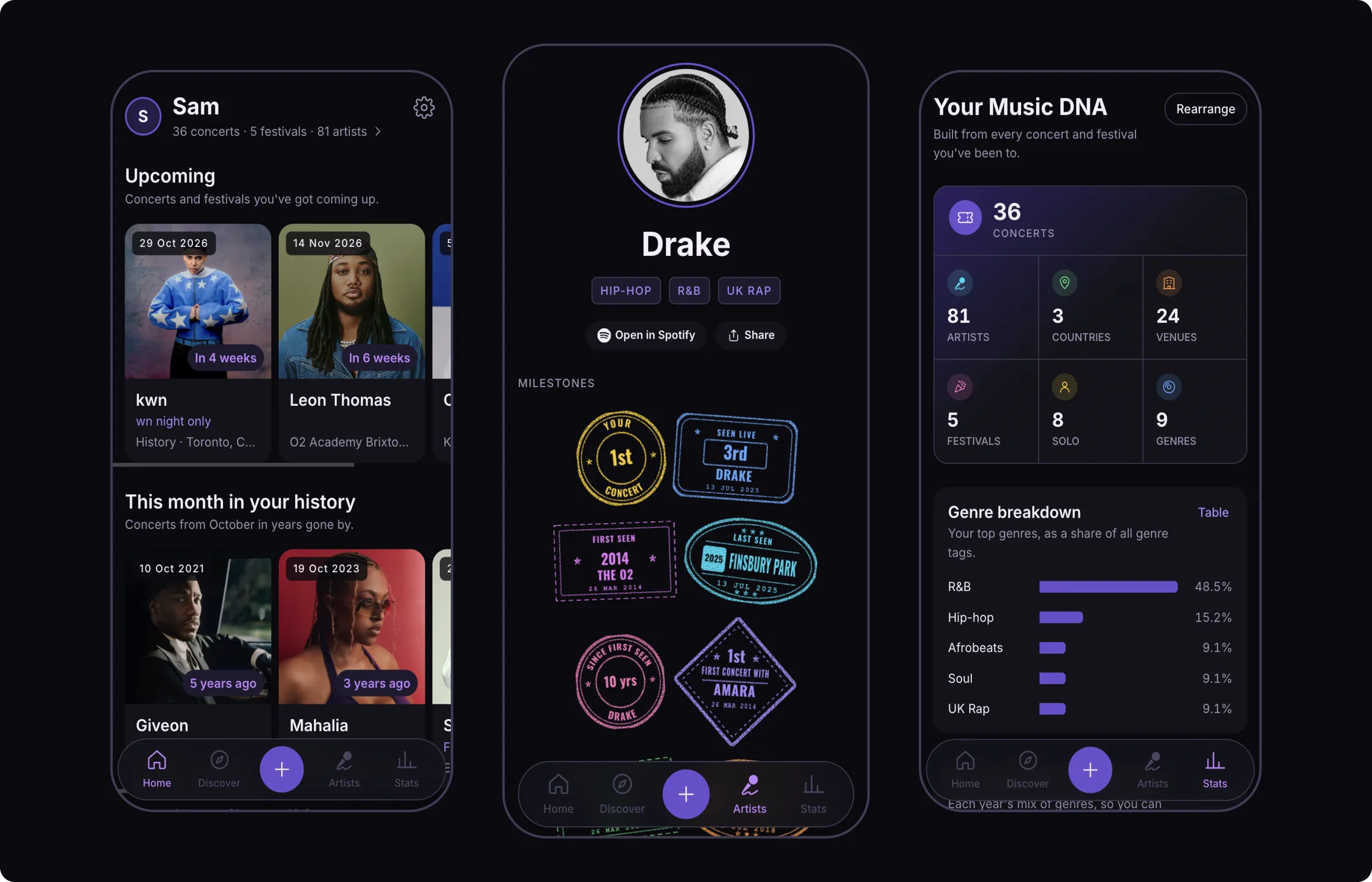
The product
Out of scope: Social feeds, fan groups, live now, ticket management
Designing the experience
The diary became the centre of the product, but I didn't want it to feel like a database of events. The experience needed to balance personal memories, useful information and visual discovery.
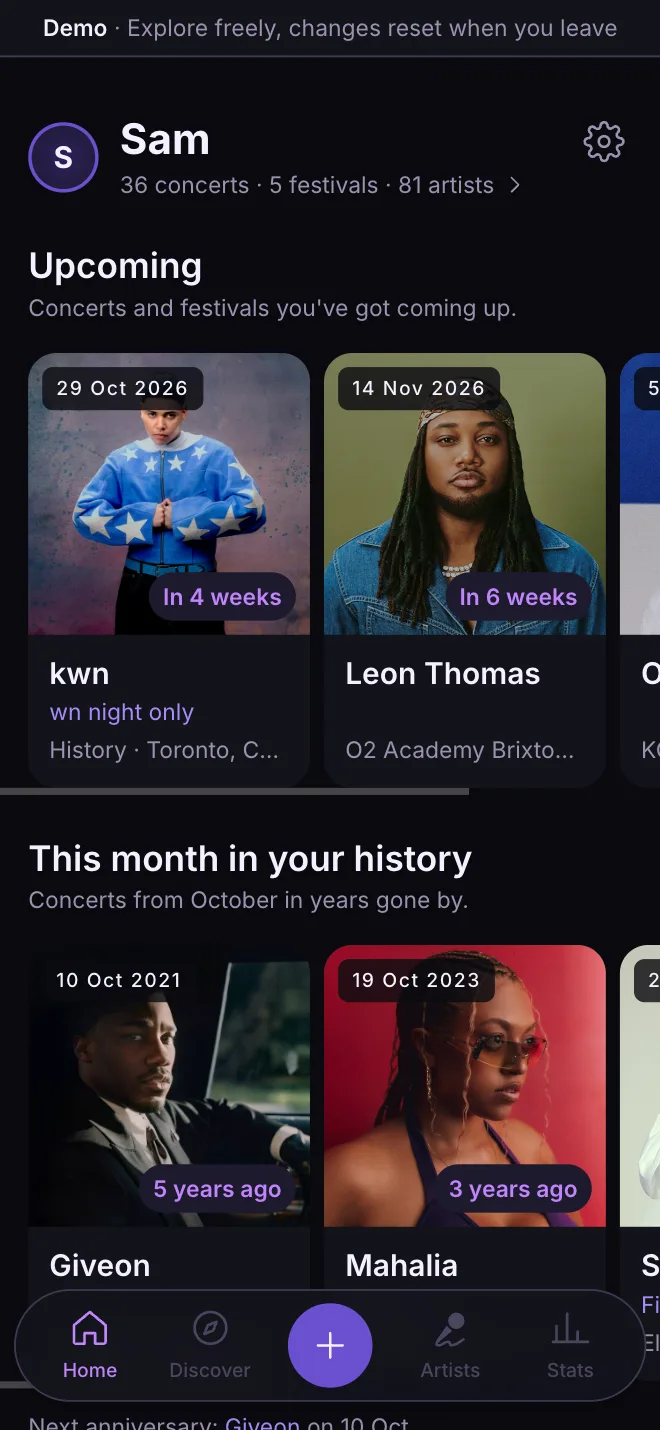
The Concert Diary was designed to make a long history of shows easy to scan and explore. Rather than presenting a simple chronological list, I used visual cards and key details to make each concert feel like a memory worth returning to.
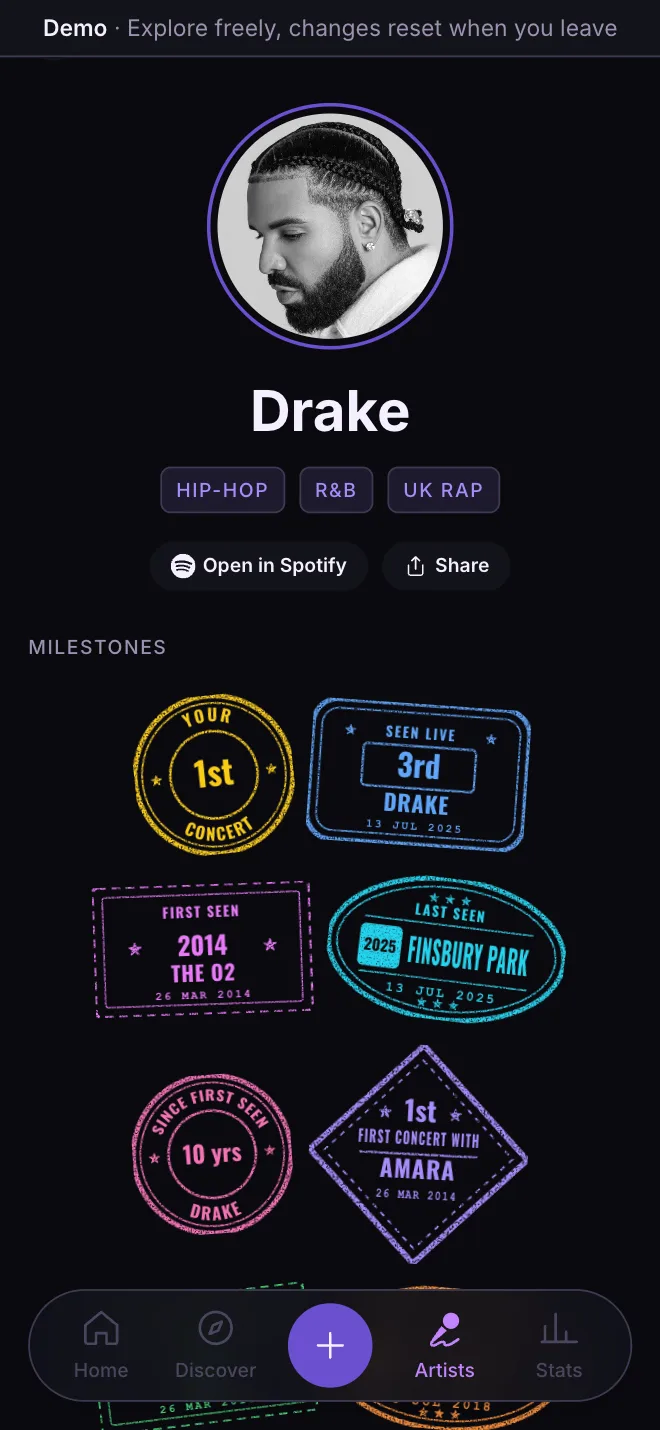
The diary also acts as the entry point into the wider product. From a show, users can explore the artist, venue, setlist and other details connected to that experience.
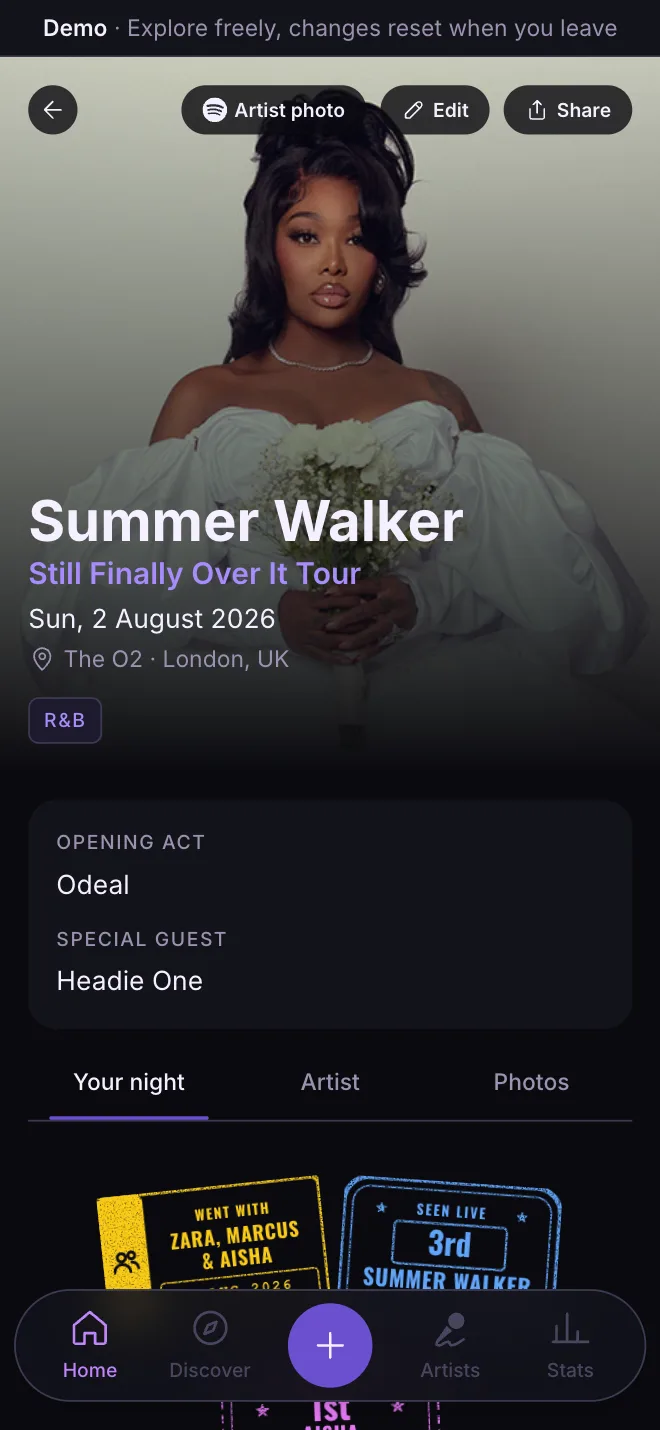
The Concert Detail experience brings together the information that makes a concert meaningful: who performed, where and when it happened, who you went with, whether you'd seen the artist before, and the setlist.
The goal was to make each entry feel more like a personal record than an event listing.
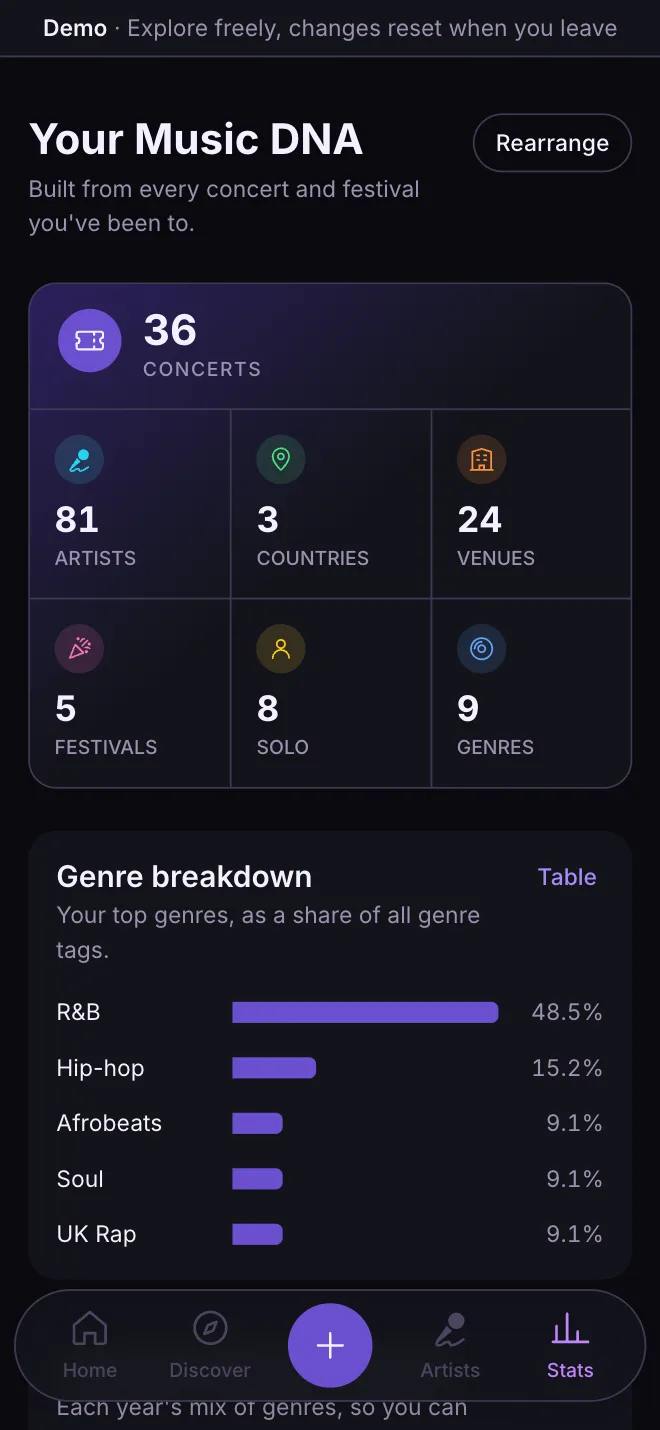
Once users have logged enough shows, the data becomes interesting in its own right.
Stats transforms that history into patterns across artists, venues, countries, genres, festivals and years. Artist pages take this further by connecting live experiences with listening behaviour, creating a richer picture of how someone's relationship with an artist changes over time.
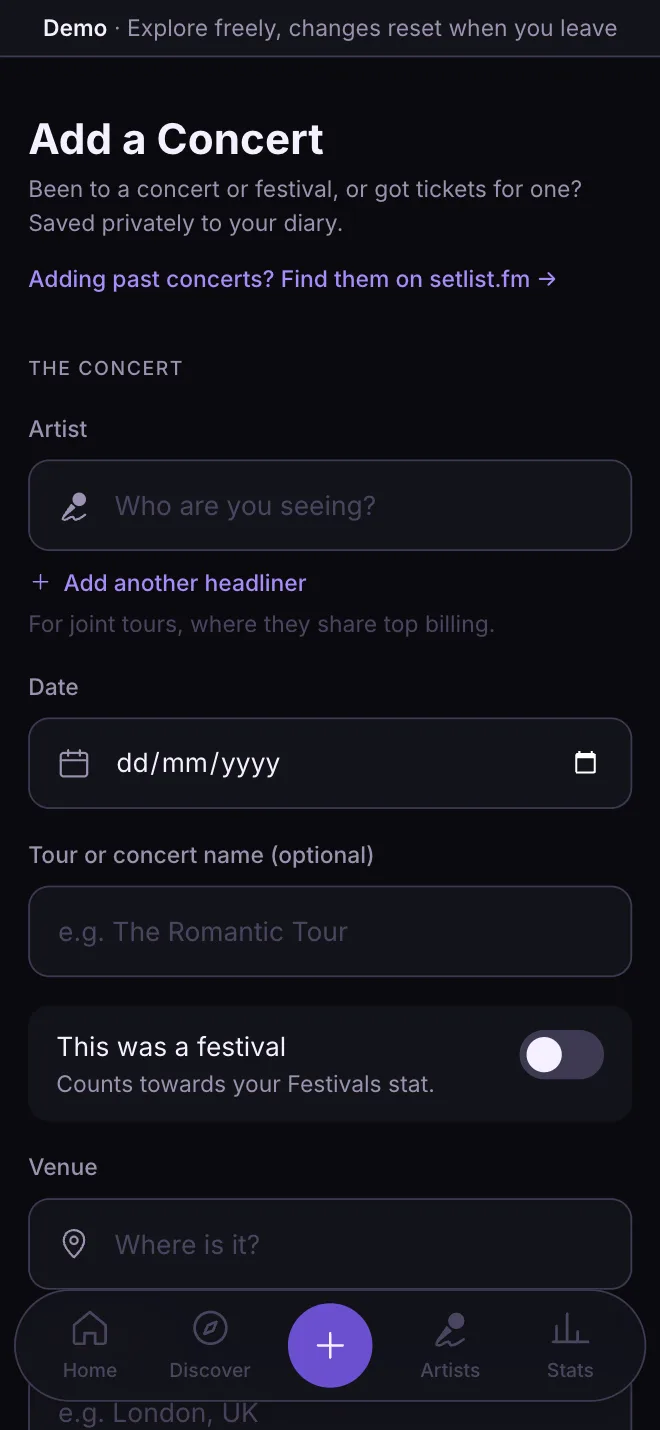
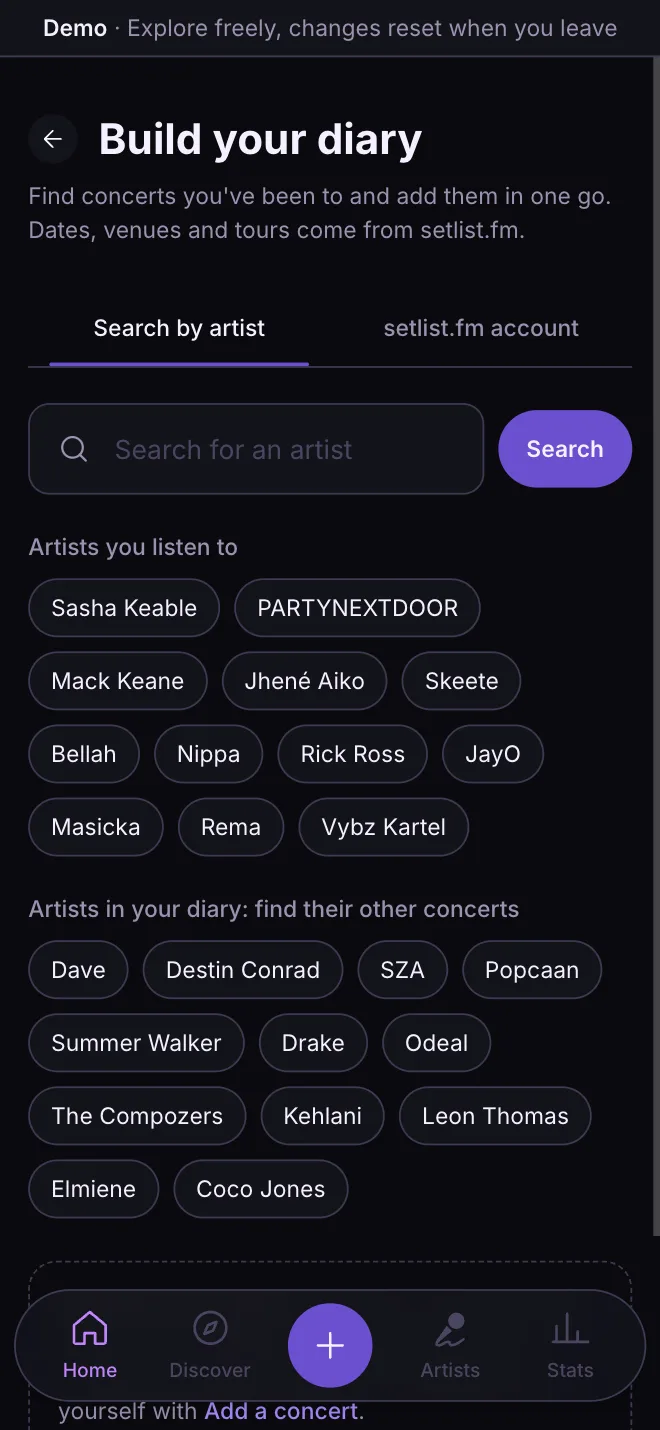
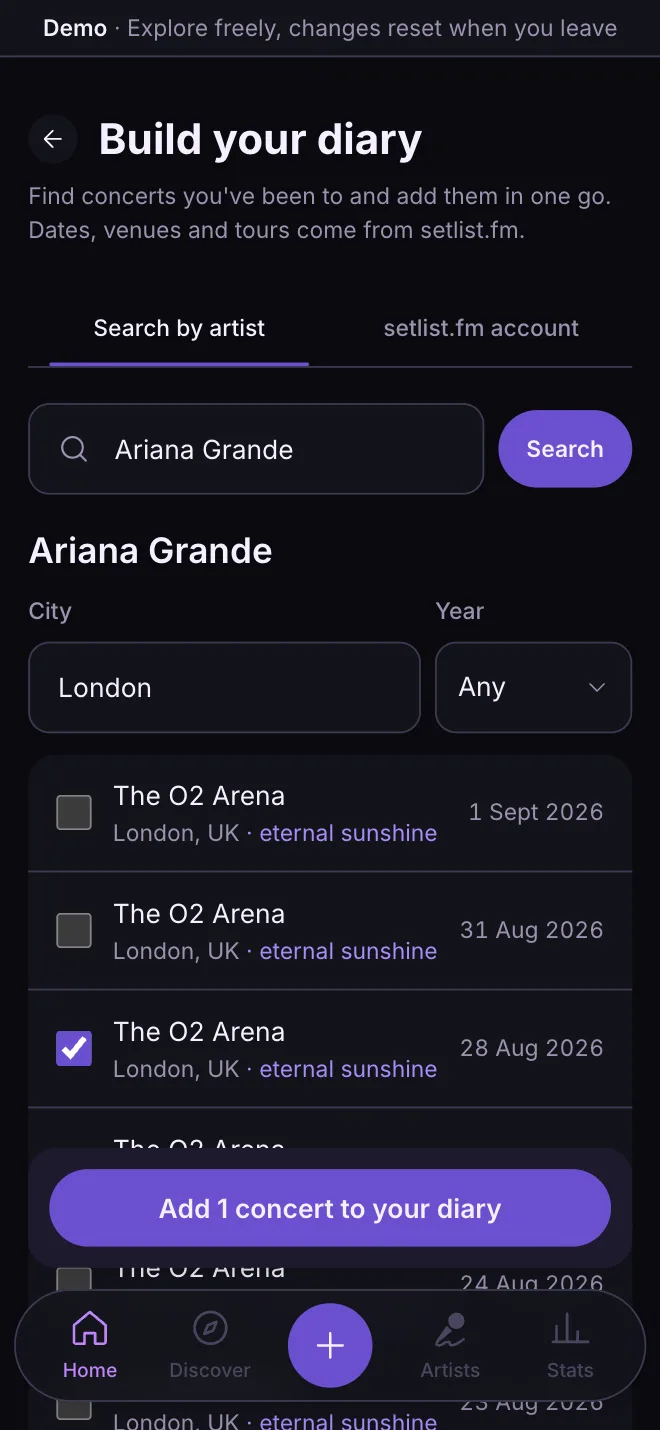
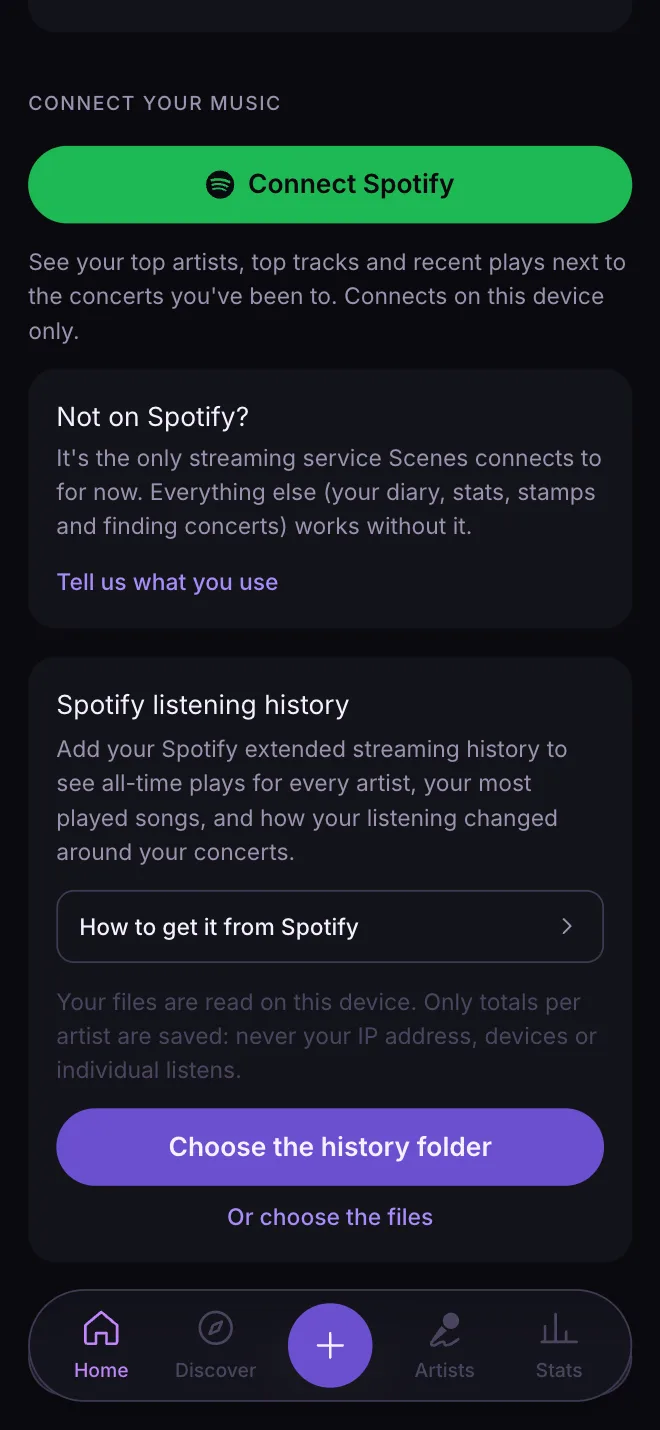
Because the value of the product depends on building up a history, adding concerts needed to be as easy as possible. I explored integrations and shortcuts that could reduce manual entry while still giving users control over what was added to their diary.
Building around existing music data
I explored ways to reduce the amount of information users needed to enter themselves. The goal wasn't to integrate APIs for the sake of it. Each integration had to reduce friction or make the resulting record more useful.
Tech stack

Design & prototyping

AI-assisted development

Database & authentication

Deployment
I designed the initial experience in Google Stitch, then used Claude Code to build the application, with Supabase for the database and authentication and Vercel for deployment.
I remained responsible for the product decisions, UX, interaction design and visual direction, while using AI-assisted development to accelerate implementation, troubleshoot problems and explore technical solutions.
Designing changed once I started building
I added a manual fallback and an empty state that invites you to add your own memories instead.
It changed how I think about design and engineering working together. AI made the building much faster, but the result was only as good as the decisions I made along the way.
From MVP to v1.5
After the MVP, Scenes grew into v1.5. Three changes made the biggest difference:
Outcome
The live demo is based on my own concert history, so you can explore a real diary without signing up.
Future direction
Scenes started as a way to remember the shows I'd been to. It is now a working MVP, built and deployed in about 48 hours. You can log your gig history, enrich shows with artist data, see patterns in your stats, and keep a more personal record of the concerts you've been to.
Next, I'd like to test with real users and explore how that accumulated history could grow into something bigger and more useful: from personal music insights to a broader live music intelligence product.